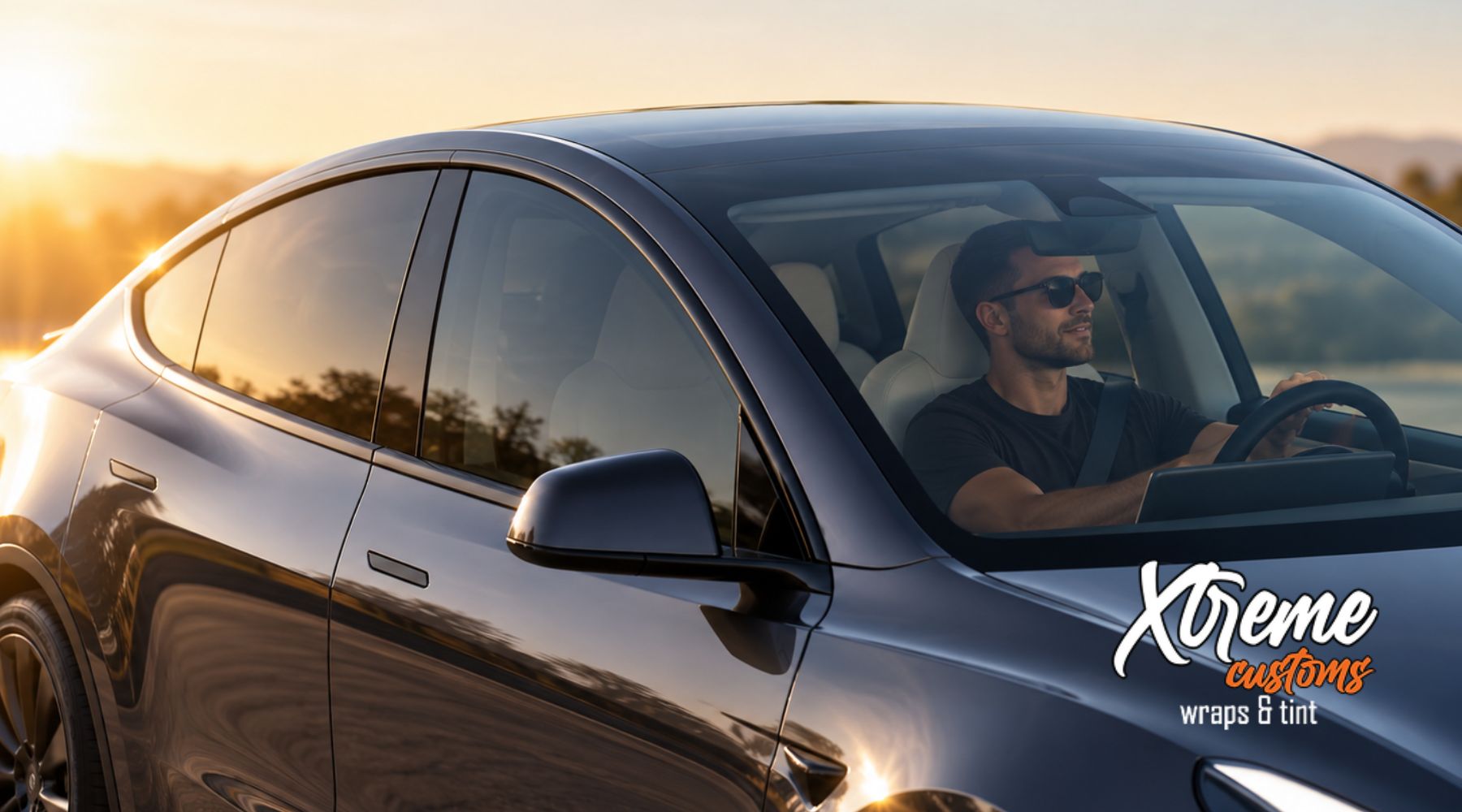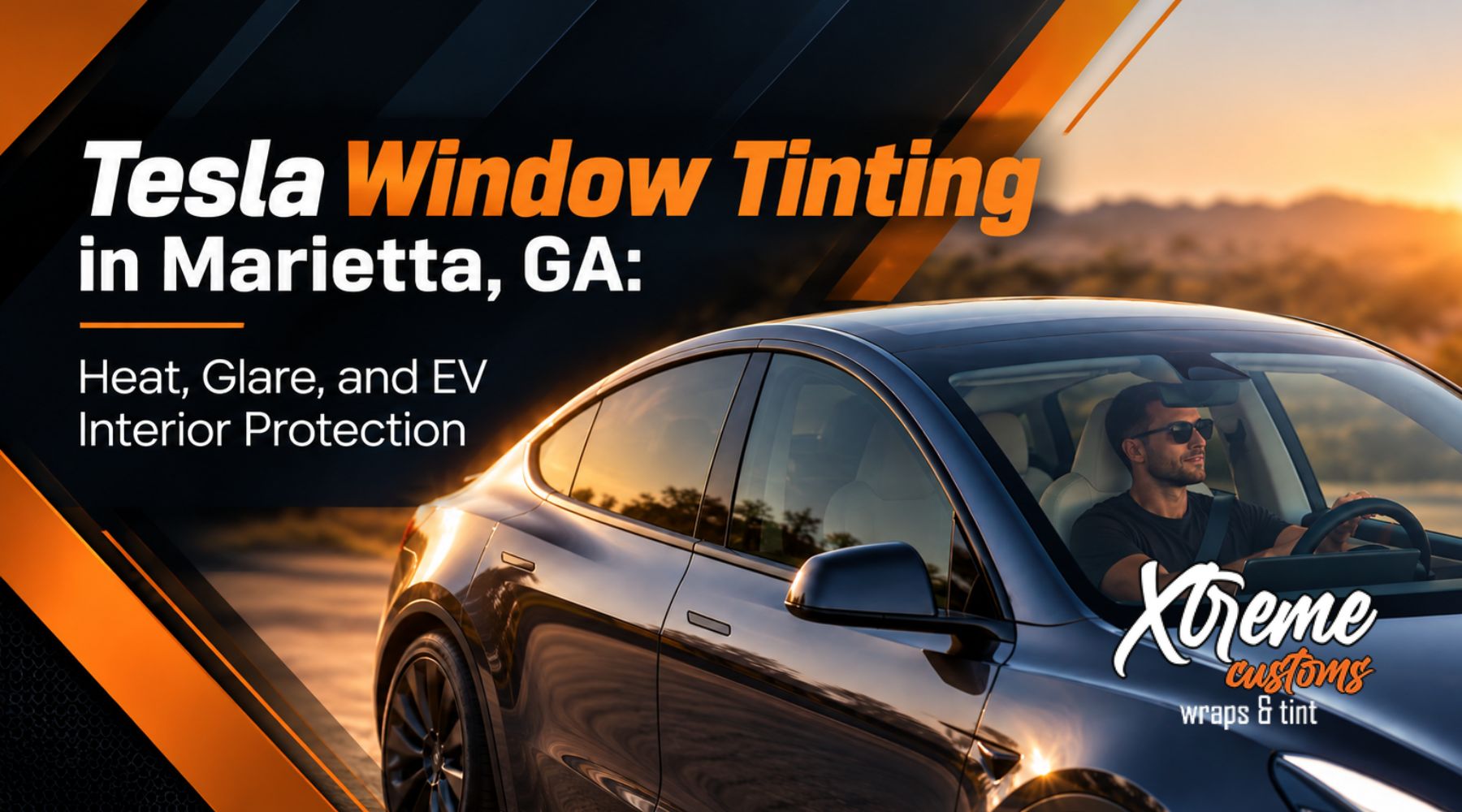
Tesla window tinting in Marietta is mainly about managing solar heat, glare, privacy, and visibility, not correcting a lack of factory UV protection. Tesla’s current U.S. owner manuals for the Model 3 and Model Y say the roof, windshield, and windows score below 2 on the UV Index scale, so the stock glass already provides strong UV protection. A good aftermarket film can still make sense if you want better heat rejection, glare control, privacy, and a more consistent look across the glass.
For a Tesla that spends time parked outside or commuting around Marietta and Metro Atlanta, the practical question is not “How dark can I go?” It is “Which film and which glass areas give me the comfort I want without creating visibility, legal, or installation problems?”
If you want the broader basics first, Xtreme’s guide to window tinting in Marietta, GA covers film types, shade choices, Georgia law basics, installation quality, and aftercare. This guide stays focused on Tesla-specific decisions.
Tesla window tinting in Marietta is mainly about managing solar heat, glare, privacy, and visibility, not correcting a lack of factory UV protection. Tesla’s current U.S. owner manuals for the Model 3 and Model Y say the roof, windshield, and windows score below 2 on the UV Index scale, so the stock glass already provides strong UV protection. A good aftermarket film can still make sense if you want better heat rejection, glare control, privacy, and a more consistent look across the glass.
For a Tesla that spends time parked outside or commuting around Marietta and Metro Atlanta, the practical question is not “How dark can I go?” It is “Which film and which glass areas give me the comfort I want without creating visibility, legal, or installation problems?”
If you want the broader basics first, Xtreme’s guide to window tinting in Marietta, GA covers film types, shade choices, Georgia law basics, installation quality, and aftercare. This guide stays focused on Tesla-specific decisions.
The right Tesla tint setup depends on your model, the glass areas you want covered, how much privacy you prefer, and whether heat and glare control are your main priorities. Xtreme Customs Wraps & Tint can help you compare carbon and ceramic film options, coverage, shade, visibility, and film performance for your actual Tesla.
What Tesla’s Factory Glass Already Does
The first thing to clear up is UV protection. Tesla does not describe Model 3 or Model Y glass as unprotected. In the current U.S. manuals, Tesla says the roof, windshields, and windows are excellent at protecting occupants from ultraviolet rays and that the glass components score below 2 on the UV Index scale.
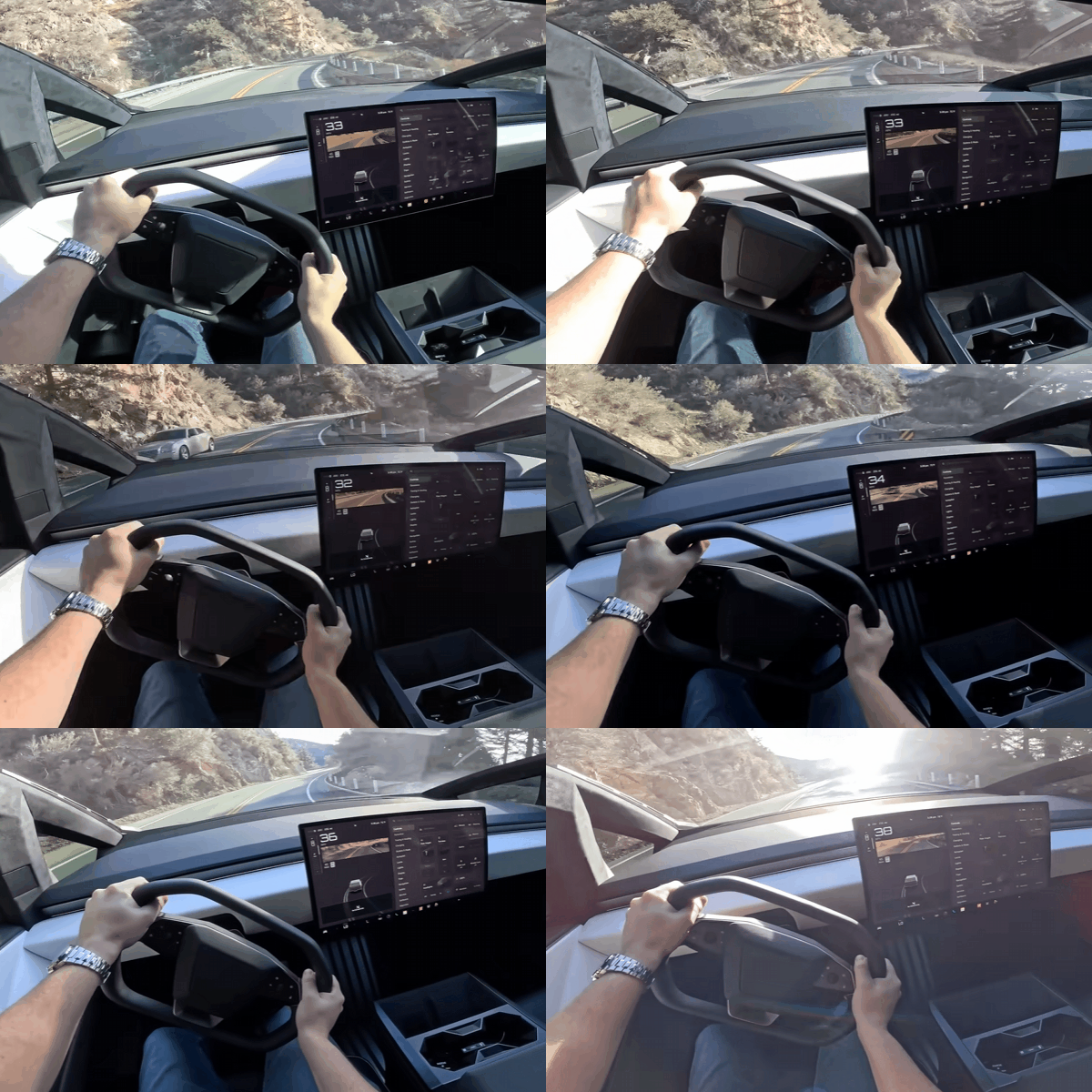
That changes the reason to buy aftermarket tint. If a sales pitch starts by telling you that a Tesla has “no UV protection” from the factory, the pitch is oversimplified. The stronger reasons to consider tint are solar heat management, glare reduction, privacy, appearance, and matching the performance of the film to the way you drive.
UV rejection and heat rejection are related to solar performance, but they are not the same measurement. A film can be very light and still manage a meaningful amount of solar energy. A dark film can also look aggressive without being the highest-performing heat-control option.
VLT, TSER, IR, and UV: The Numbers Tesla Owners Should Compare
| Metric | What It Tells You | Why It Matters |
|---|---|---|
| VLT | Visible Light Transmittance: how much visible light passes through the filmed glass. | Lower VLT looks darker. VLT does not tell you the whole heat-rejection story. |
| TSER | Total Solar Energy Rejected: the share of total solar energy rejected by the glass-and-film system. | Useful for comparing overall solar heat performance. |
| IR / IRER | Infrared rejection measurements, which describe performance against portions of infrared solar energy. | Helpful, but compare like-for-like test methods and the actual product data sheet. |
| UV Rejection | How much ultraviolet radiation the film rejects. | Important, but Tesla’s own glass already has strong UV protection, so do not treat this as the only reason to tint. |
If heat is your priority, ask for the film data sheet instead of choosing from shade samples alone. That makes the conversation about performance, not just darkness.
Heat Rejection Matters More Than How Dark the Tint Looks
One of the most common tint mistakes is assuming darker automatically means cooler. It does not. Film technology matters.
Xtreme currently lists carbon window film as an option. Carbon can be a good fit when privacy, style, glare reduction, and budget are the main goals.
Ceramic is usually the stronger fit when the driver cares most about heat control and cabin comfort, especially when they want useful solar performance without making the glass extremely dark.
Modern metal-free ceramic films are available that are designed to reject solar heat without using a metal layer that can interfere with common signals such as GPS or mobile connectivity. 3M’s Ceramic IR series is one manufacturer example. That does not mean every ceramic film performs the same, and it does not mean Xtreme uses that exact 3M product. The point is to compare the exact film line, its test data, and its warranty before you decide.
Xtreme’s current carbon and ceramic window tint options include multiple shade levels. Ask which specific film line is being quoted and how its solar performance compares at the shade you are considering.
Which Tesla Glass Areas Should You Tint?
A Tesla tint quote should be clear about coverage. Large glass areas, glass roofs, and the windshield camera zone make “full car tint” too vague by itself. Ask exactly which pieces of glass are included.
| Glass Area | Main Reason to Tint | What to Check Before Booking |
|---|---|---|
| Front Side Windows | Heat, glare, privacy, appearance | Current Georgia law, nighttime visibility, starting glass, final measured VLT, film type. |
| Rear Side / Back Glass | Heat management, privacy, visual consistency | Factory glass darkness, rear defroster, glass shape, and whether the quote covers the full rear glass where applicable. |
| Panoramic / Roof Glass | Overhead heat and glare comfort | Tesla factory UV protection is already strong. Ask whether added film is useful for your comfort goal and compatible with the exact glass and film. |
| Windshield | Heat and glare management in some setups | Georgia law, Tesla camera enclosure, visibility, and a professional installation approach. This is not a casual add-on. |
On a Model 3, rear-glass coverage is worth asking about directly because the rear glass is large and the coverage approach can affect both the quote and the finished look. On any Tesla, get the coverage written down before comparing prices between shops.
What About the Panoramic Roof?
A glass roof is one of the first things Tesla owners notice on a sunny day, so roof tint gets a lot of attention. It is not automatically necessary.
Tesla already states that the Model 3 and Model Y roof glass provides strong UV protection. That means roof film should be treated mainly as a comfort and glare decision, not as a fix for “unprotected” roof glass. Some drivers want more overhead heat control or a darker appearance. Others are satisfied with the factory glass and would rather spend the budget on the side and rear windows.
The right answer depends on the exact Tesla model and year, the film being proposed, and the installer’s compatibility guidance. Ask whether roof coverage is included, what product is used, and what benefit the shop expects from that specific film. Skip any blanket claim that every Tesla roof must be tinted.
Cameras, Electronics, and Windshield Tint Need Extra Care
Tesla vehicles rely on cameras mounted around the vehicle, including cameras at the windshield above the rear-view mirror. That area needs clear visibility. Tesla’s current Model 3 cleaning guidance also warns that a hydrophobic treatment on the front windshield can affect the visibility of the Self-Driving cameras, and Tesla states that it is not responsible for damage associated with applying window treatments.
That is not a blanket statement that automotive tint is forbidden. It is a reason to treat the windshield and camera enclosure as a technical part of the job. A professional installer should understand where the camera hardware sits, how the selected film is being applied, and what Georgia law allows on the windshield.
Signal interference is a separate issue. If that is a concern, ask about a metal-free film. Manufacturer data from major film brands shows that non-metalized ceramic films can be designed to avoid interference with GPS, satellite radio, and mobile devices. Again, confirm the exact product being installed rather than assuming every “ceramic” film has identical construction or performance.
Will Window Tint Improve Tesla Range?
Do not buy window tint because someone promises extra miles per charge. That is not a claim this article can support from the primary evidence reviewed.
A heat-rejecting film can reduce solar energy entering through the glass and may make the cabin more comfortable in direct sun. It is reasonable to discuss that as heat-load management. It is not reasonable to turn it into a guaranteed battery, efficiency, or range number. Real EV energy use also changes with weather, speed, route, HVAC settings, driving style, tires, and many other factors.
For most Tesla owners, the better buying question is simple: does the film make the cabin more comfortable while giving you the visibility and appearance you want? Treat any range benefit as unproven unless a source shows controlled, vehicle-specific evidence.
How to Choose the Right Tint Shade in Marietta
Shade selection should start with Georgia law and how you actually drive. Xtreme’s current service page lists film shades from 5% to 70%, but that does not mean every shade is legal or comfortable on every window of every vehicle.
Also remember that the number printed on a film sample is not automatically the final VLT of the vehicle. The factory glass already transmits a certain amount of visible light, and the film changes that combined result. The final setup is what matters for compliance and visibility.
For a Marietta daily driver, ask yourself four questions:
- How much privacy do I really want?
- How comfortable am I driving at night or in rain with darker glass?
- Am I choosing a darker shade for looks when a lighter high-performance film could meet the heat goal?
- Will the finished glass meet current Georgia requirements for that window?
That is a better way to choose than copying a shade from a photo of someone else’s Tesla.
Questions to Ask Before Booking Tesla Window Tint
A good quote should tell you more than a percentage and a price. Before you book, ask:
- What exact carbon or ceramic film line are you installing, and can I see its performance data sheet?
- Which windows are included in the quote, including rear glass and roof glass?
- If I have a Model 3, does the quote cover the full rear glass or a different coverage approach?
- How do you handle the windshield camera area if windshield film is being discussed?
- What will the final VLT be on the glass I want tinted, and does that setup comply with current Georgia law?
- What does the film warranty actually cover?
- What are the aftercare instructions before I roll the windows down or clean the film?
- Can the shop quote my Tesla by year, model, and requested coverage instead of giving me a generic package?
Those questions make it easier to compare installation quality and film value instead of shopping only by the darkest shade or the lowest quote.
Plan the Tint Around Your Tesla, Not a Generic Package
The best Tesla tint setup in Marietta is the one that matches the vehicle, the driver, and the glass areas being covered. Tesla already gives Model 3 and Model Y owners strong factory UV protection. Aftermarket tint earns its place by helping with solar heat, glare, privacy, and appearance, while keeping visibility and legal requirements in view.
If comfort is the priority, compare ceramic film by its actual solar-performance data rather than choosing the darkest sample. If privacy and style matter more, carbon may be a practical fit. If roof or windshield film is part of the plan, ask more questions because those areas deserve extra attention.
For a vehicle-specific recommendation, request a Tesla tint quote from Xtreme Customs Wraps & Tint in Marietta or call (470) 418-5729. Have your Tesla year and model, preferred darkness, comfort goal, and desired glass coverage ready so the quote is built around the vehicle.
A Tesla tint quote should be based on your actual model, the glass areas you want covered, your comfort goals, and how much privacy you prefer. Xtreme Customs Wraps & Tint can help you compare carbon and ceramic film options, shade levels, heat and glare performance, visibility, and coverage for the specific glass on your Tesla.
Tesla Window Tinting FAQ
Does Tesla already have UV-protective glass?
Yes. Tesla’s current U.S. Model 3 and Model Y owner manuals say the roof, windshields, and windows score below 2 on the UV Index scale. Aftermarket tint can still be useful for heat, glare, privacy, and appearance, but it should not be sold on the claim that the factory glass has no UV protection.
Is ceramic or carbon tint better for a Tesla?
Ceramic is usually the stronger fit when heat control and cabin comfort are the priorities. Carbon can still make sense for privacy, style, glare reduction, and budget. Compare the exact film data sheet rather than relying on the label alone.
Should I tint the panoramic roof on a Tesla?
Not automatically. Tesla already reports strong UV protection from the roof glass. Add roof film only if the comfort, glare, or appearance benefit makes sense for your vehicle and the selected film is compatible with that glass.
Will tint interfere with Tesla cameras or electronics?
The windshield camera area must remain unobstructed, so windshield work needs extra care. For signal concerns, metal-free automotive films are available that are designed not to interfere with GPS or mobile devices. Confirm the exact film and installation approach with the shop.
Does window tint improve Tesla range?
No specific range improvement should be promised from tint alone. Heat-rejecting film can reduce solar heat entering the cabin and improve comfort, but actual EV energy use depends on many variables.
What tint percentage should I choose in Georgia?
There is no one-size answer. Choose around current Georgia law, nighttime visibility, privacy, starting glass, and film performance. Ask the installer about the final measured VLT for the glass-and-film combination.
2001 Polytechnic Ln Suite B, Marietta, GA 30060, United States
+1 470-418-5729
Monday to Friday 9:30 AM–6 PM
Saturday to Sunday Closed